Healthy Action
Australia > Immune_Health
|
|
|
AUST L
178037
|
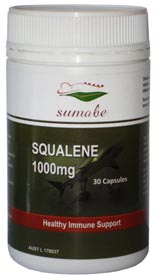
Sqalene 1000mg + Vitamin E (30
Capsules) 

1 bottle (30 Capsules) AU$22.00
2 bottles (2 month supply) AU$38.00 -
save$6.00
3 bottles (Get 1 free) AU$57.00 - save
$31.00!
4 bottles (get 2 free) AU$83.00 -
save$49.00!
|
Squalene is a major component of skin
surface lipids such as sebum, where it assists in maintaining healthy skin. Squalene1000mg may assist in the
maintenance of a healthy immune system and in the maintenance of general wellbeing.
Directions for use: Adults: Take 1capsule daily, with meals, or as directed by your healthcare
professional.
Standard Indications: Aids, assists or helps in the maintenance of general well-being.
Specific Indications: •Squalene is a major component of skin surface lipids such as sebum,
where it assists in maintaining healthy skin.

•May assist in the maintenance of a healthy immune system.
Squalene is a natural organic compound originally obtained for commercial purposes primarily
from shark liver oil, though plant sources (primarily vegetable oils) are used as well, including amaranth seed,
rice bran, wheat germ, and olives. All plants and animals produce squalene, including humans. Squalene has been
proposed to be an important part of the Mediterranean diet as it may be a chemopreventative substance that protects
people from cancer.
Squalene is a hydrocarbon and a triterpene, and is a natural and vital part of the synthesis of cholesterol,
steroid hormones, and vitamin D in the human body. Squalene is used in cosmetics, and more recently as an
immunologic adjuvant in vaccines.
Squalene is the biochemical precursor to the whole family of steroids. Oxidation (via squalene monooxygenase) of
one of the terminal double bonds of squalene yields 2,3-squalene oxide, which undergoes enzyme-catalyzed
cyclization to afford lanosterol, which is then elaborated into cholesterol and other steroids.
Use as an adjuvant in vaccines: Immunologic adjuvants are substances, administered in
conjunction with a vaccine, that stimulate the immune system and increase the response to the vaccine. Squalene is
one of those adjuvants., The New York Times, September 21, 2009.</ref> It is added to improve the efficacy of
several vaccines, including pandemic flu and malaria vaccines. This includes several European countries, which use
these formulations in their 2009 flu pandemic vaccines.
An adjuvant using squalene is Novartis' proprietary adjuvant MF59, which is added to influenza vaccines to help
stimulate the human body's immune response through production of CD4 memory cells. It is the first oil-in-water
influenza vaccine adjuvant to be commercialized in combination with a seasonal influenza virus vaccine. It was
developed in the 1990s by researchers at Ciba-Geigy and Chiron; both companies were subsequently acquired by
Novartis. It is present in the form of an emulsion and is added to make the vaccine more immunogenic. However, the
mechanism of action remains unknown. MF59 is capable of switching on a number of genes that partially overlap with
those activated by other adjuvants. How these changes are triggered is unclear; to date, no receptors responding to
MF59 have been identified. One possibility is that MF59 affects the cell behavior by changing the lipid metabolism,
namely by inducing accumulation of neutral lipids within the target cells. An MF59-adjuvanted influenza vaccine
(Fluad, developed by Chiron, which contains about 10 mg of squalene per dose) has been approved by health agencies
and used in several European countries for seasonal flu shots since 1997. However, the Food and Drug Administration
has not authorized the use of such adjuvants in the United States. Glaxo Smith Kline used the squalene-based AS03
adjuvant in their 2009 influenza pandemic vaccine Pandemrix and Arepanrix.
A 2009 meta-analysis by researchers at Novartis Vaccines and Diagnostics that was published in the journal Vaccine
brought together data from 64 clinical trials of influenza vaccines with the squalene-containing adjuvant MF59 and
compared them to the effects of vaccines with no adjuvant. The analysis reported that the adjuvanted vaccines were
associated with slightly lower risks of chronic diseases, but that neither type of vaccines altered the rate of
autoimmune diseases; the authors concluded that their data "supports the good safety profile associated with
MF59-adjuvanted influenza vaccines and suggests there may be a clinical benefit over non-MF59-containing
vaccines".
|